
Knee-High vs. Thigh-High Compression: When a Thigh-High Is Worth It
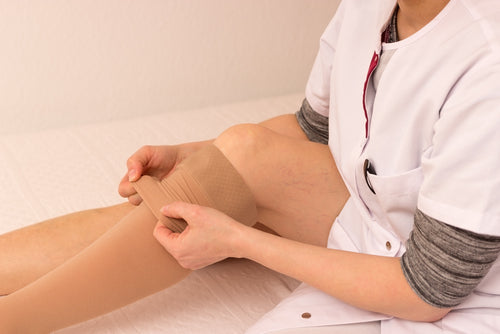
If you're trying to decide between a knee-high and a thigh-high, the question usually isn't which one is "better" but how much of your leg actually needs support. Thigh-high compression covers the whole leg, from foot to upper thigh, while a knee-high stops below the knee. That difference matters more for some people than others. Below, we walk through how the two compare, when a taller stocking makes sense, and what to keep in mind before you choose, so you can decide what fits your needs rather than guess.
Knee-High vs. Thigh-High: The Short Answer
The choice comes down to where your symptoms are:
- A knee-high is often enough if your swelling, aching, or heaviness stays in the foot and calf. It's easier to put on, cooler in warm weather, and sits discreetly under most clothing.
- A thigh-high makes more sense when you're dealing with swelling, veins, or tired legs above the knee. A knee-high physically can't reach that area, so no amount of lower-leg compression will address an upper-leg issue.
If you’ve been comparing knee-high and thigh-high compression stockings and your needs sit above the knee, the taller garment is usually the better match. When symptoms are limited to the lower leg, a knee-high stocking may be all you need. Your doctor can help confirm what's right for you.
Why People Choose a Thigh-High
Once you know support above the knee matters, a compression thigh-high offers a few clear advantages worth understanding.
It Supports the Whole Leg
Because a thigh-high covers nearly the entire leg, graduated support extends from the ankle all the way up, snugger at the foot and gradually easing as it rises. That full-length coverage is the core reason to consider one, especially if you're recovering from a procedure or spend long stretches sitting or on your feet.

It Reaches Veins and Swelling a Knee-High Can't
Spider and varicose veins often appear along the thigh or behind the knee, and swelling can settle above the knee as well. A thigh compression garment covers that skin where a shorter style stops. Compression isn't a cure, but many people find that consistent, full-leg support helps them feel more comfortable throughout the day, one of the most commonly cited benefits of thigh-high compression stockings.
It Can Be More Comfortable Than Pantyhose
For full-leg coverage without a waistband, many people find thigh-highs more comfortable than pantyhose for all-day wear, and easier to manage when you need to use the restroom. They come in closed-toe, open-toe, sheer and opaque fabrics, in both regular and plus sizes.
Not sure a thigh-high is right for you? Compare the current styles, fabrics, and compression options side by side:
Shop women's thigh-high compression stockings
Shop men's thigh-high compression stockings
Getting the Fit and Feel Right
A thigh-high only delivers on its benefits if it fits well and stays put, so a few practical details make a real difference:
- Put them on first thing in the morning, before you're out of bed, when swelling is at its lowest.
- Ease them on gradually. Roll the stocking down to the heel, slip your foot in, then unroll it slowly up the leg and smooth out any wrinkles.
- Make donning easier with a fitting lotion designed for compression garments or a donning aid such as grip gloves or a stocking butler.
It also helps to own a few pairs so you can alternate while one is washing. Wash after every use with mild soap and water, rinse, and air dry to keep the compression working as intended. Do not wring out. Follow our wear and care guide here.

Still Deciding?
If your support needs stop at the calf, a knee-high will serve you well. If they climb above the knee, a thigh-high is the style built for the job. When you're ready to compare fabrics, cuts, and compression levels, browse the full thigh-high range for women and men, and reach out to our team at 877-525-7224 if you'd like help choosing.